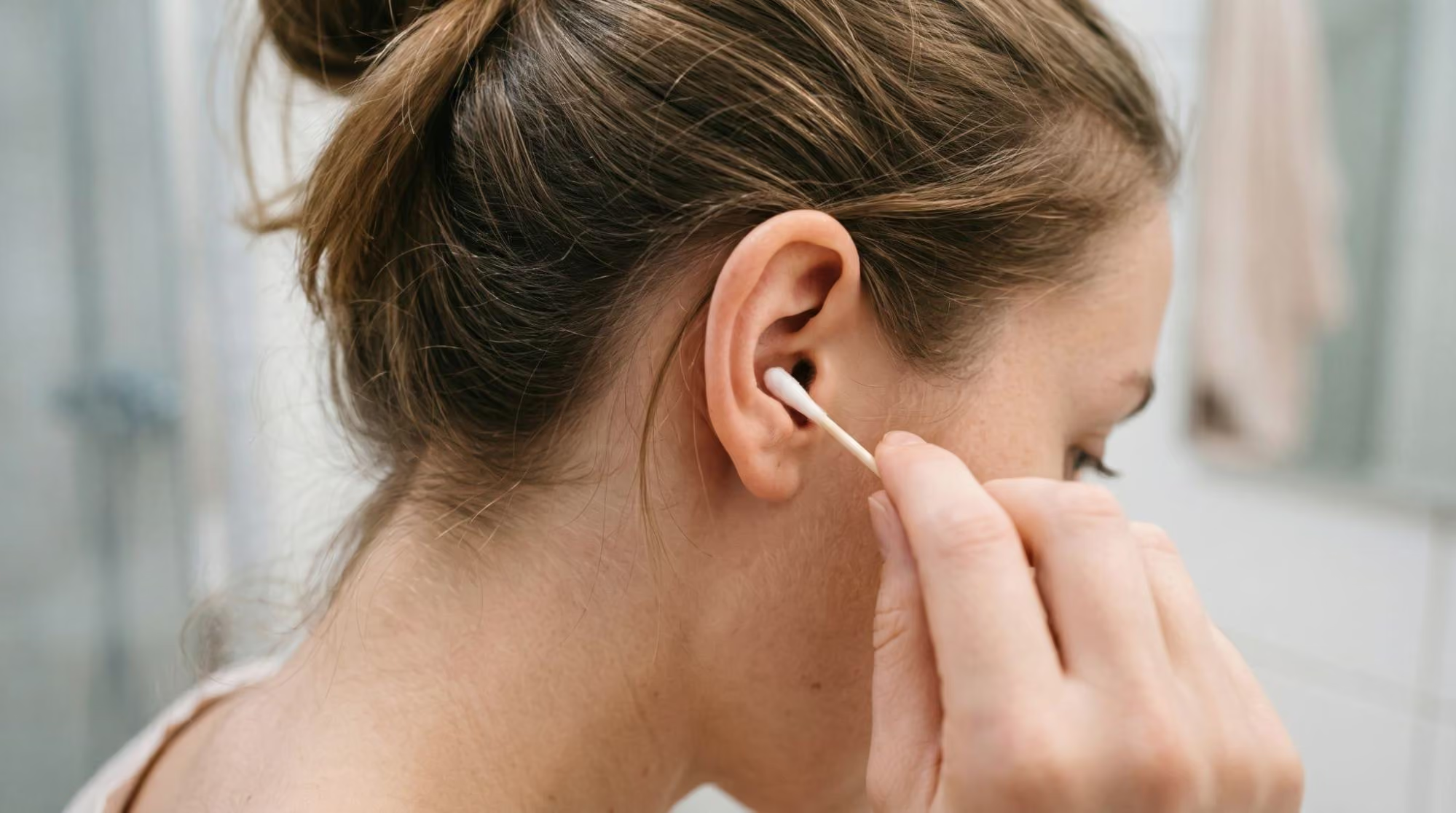
The sound that won’t stop: Understanding tinnitus and what you can do about it

A noise only you can hear
For many people, it starts subtly; a faint ringing after a concert, a low hum at the end of a long workday. But for millions of Americans, that sound never fully goes away. It follows them into quiet rooms, disrupts their sleep, and turns ordinary moments into a quiet source of distress. It’s called tinnitus, and while it may be invisible to everyone around you, its impact is deeply real.
Tinnitus — the perception of sound when no external source is present — is one of the most common yet least understood audiological conditions in the United States. Approximately 27 million adults experience tinnitus symptoms each year1, and experts believe that figure is growing. For many of those individuals, the condition is not just bothersome, it’s life-altering.
More than a ringing in your ears
Many people dismiss tinnitus as a quirk or a temporary annoyance. Others assume nothing can be done about it and simply try to push through. But not seeking help can carry a significant cost.
Tinnitus isn’t a disease in itself; it’s a symptom, a signal from your auditory system that something may need attention. In the majority of cases, it is associated with underlying hearing loss; often noise-induced, age-related, or both.2 That connection matters: when tinnitus goes unaddressed, so does the hearing loss driving it.
The impact doesn’t stop at the ear. Research has found that people with tinnitus face significantly elevated rates of depression, anxiety, and insomnia compared to those without it.3 One large meta-analysis published in 2025 found that people with tinnitus were nearly twice as likely to experience depression and more than three times as likely to report insomnia.4 The constant, inescapable nature of the sound wears on a person's emotional reserves in ways that compound over time.
And yet, for many people, the path to help remains unclear. Research has identified disparities in who receives care: racial and ethnic minority groups are significantly less likely to discuss tinnitus with a physician, and less likely to receive a formal evaluation even when they do. Tinnitus, like so much of hearing health, does not affect everyone equally.
What’s actually happening
To understand tinnitus, it helps to understand how hearing works. Sound travels into the ear and is converted into electrical signals by tiny hair cells in the cochlea, the spiral-shaped organ deep in the inner ear. Those signals travel along the auditory nerve to the brain, which interprets them as sound.
When those hair cells are damaged through loud noise, aging, certain medications, or other causes, they can begin misfiring, sending signals to the brain even in the absence of external sound. The brain, searching for input that isn’t there, may amplify this internal noise. The result is tinnitus: a sound that exists in the nervous system, not in the room.5
Tinnitus can take many forms. Some people hear a steady, high-pitched ringing. Others describe whooshing, buzzing, clicking, or hissing. The sound may be constant or intermittent, present in one ear or both. For roughly 40 percent of those with tinnitus, symptoms are always present.
Although there is currently no universal cure for tinnitus, this does not mean treatment is unavailable or ineffective. Audiologists and Ear Nose and Throat Physicians (ENTs) have a range of evidence-based tools at their disposal, including sound therapy, cognitive behavioral therapy, hearing aids with built-in tinnitus masking features, and tinnitus retraining therapy (TRT).6 For people whose tinnitus is linked to hearing loss, addressing the underlying hearing deficit — sometimes with hearing aids — can meaningfully reduce the perception of tinnitus by restoring the auditory input the brain is straining to find.

Taking tinnitus seriously — and what that looks like
The most important shift for anyone experiencing tinnitus is recognizing it as a signal worth acting on and not something they simply have to live with unsupported.
A hearing evaluation is the right first step. A qualified hearing care professional or audiologist can assess whether underlying hearing loss is present, identify contributing factors, and map out a management approach tailored to the individual’s experience.
For those whose tinnitus coexists with hearing loss (which is most people), modern hearing aids offer dual benefits. They amplify the sounds the ear is missing, which reduces the brain’s tendency to fill silence with phantom noise. Many devices also include dedicated tinnitus masking programs, using gentle background sounds to make the tinnitus less perceptible over time. Some patients report meaningful relief within days to weeks.
Behavioral therapies, particularly cognitive behavioral therapy adapted for tinnitus, have strong evidence behind them for managing the emotional and psychological dimensions of the condition. The goal is not to eliminate the sound, but to change the relationship with it; to shift tinnitus from something that dominates daily life into something that fades into the background.
None of this requires struggling in silence. And yet, millions do, in part because they don’t know that help exists or because the cost of accessing it feels out of reach.
This is where organizations like the Miracle-Ear Foundation make a direct difference. Through its Gift of Sound ® program, the Foundation provides hearing aids and comprehensive hearing care to individuals who lack the financial means to access them independently. For someone whose tinnitus is rooted in untreated hearing loss, that intervention can be transformative.
You don’t have to live with the ringing
If you’ve been hearing a sound that others can’t, one that shows up in the quiet moments, disrupts your sleep, or colors your days, it’s worth taking seriously. Talk to a hearing care professional . Ask about tinnitus evaluation. And know that you are far from alone: tens of millions of Americans share this experience, and care is available.
For those who face financial barriers to hearing healthcare, the Miracle-Ear Foundation’s Gift of Sound program may be able to help. No one should have to choose between their hearing health and their financial stability.
You can help someone rediscover the joy of hearing — donate to the Gift of Sound program today.
Know someone who lives with chronic ringing in their ears? Share this resource, it could be the push they need to finally seek care.
Hearing health is a journey, not a single conversation. Explore more articles on hearing loss, prevention, and care.
References
- National Library of Medicine. (2024). Tinnitus prevalence, associated characteristics, and related healthcare use in the United States: a population-level analysis. https://pubmed.ncbi.nlm.nih.gov/38269207/
- American Speech-Language-Hearing Association. (2026). Tinnitus and Hyperacusis. https://www.asha.org/practice-portal/clinical-topics/tinnitus-and-hyperacusis/?srsltid=AfmBOoqili2BRYHZciNd74teilUVBCoVHmDXP1CODZnXjB97qOT0UEFB
- National Library of Medicine. (2023). Tinnitus and Its Relation to Depression, Anxiety, and Stress-A Population-Based Cohort Study. https://pubmed.ncbi.nlm.nih.gov/36769823/
- National Library of Medicine. (2025). Systematic review and meta-analysis of the correlation between tinnitus and mental health. https://pubmed.ncbi.nlm.nih.gov/40088765/
- National Institute on Deafness and Other Communication Disorders. (2023). Tinnitus. https://www.nidcd.nih.gov/health/tinnitus
- American Academy of Audiology. (2024). Tinnitus Teratment: A Comprehensive Approach. https://www.audiology.org/news-and-publications/audiology-today/articles/tinnitus-treatment-a-comprehensive-approach/